
Stakeholder engagement
Stakeholder engagement helps Sampo Group to proactively consider the needs and wishes of its stakeholders. The purpose of the stakeholder engagement is to build trust between the Group and its stakeholders and to pursue common benefits.
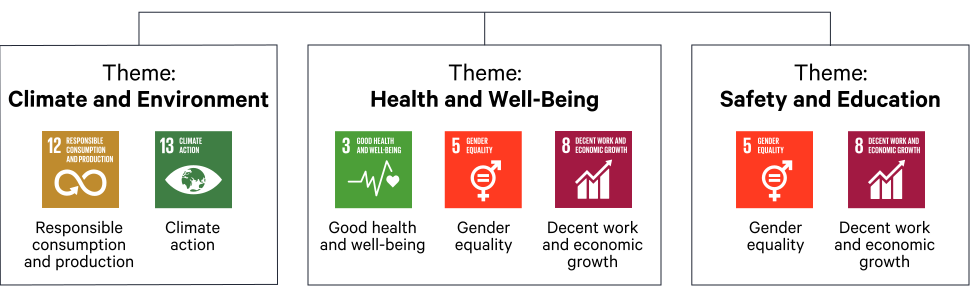
Sampo Group seeks to ensure meaningful engagement with stakeholders, for example, by identifying relevant stakeholders, ensuring continuous and regular communication, and providing suitable forums for dialogue. Examples of topics on which Sampo Group engages with stakeholders include climate and environment (e.g. loss prevention), health and well-being (e.g. personal health), and safety and education (e.g. risk management). The themes link tightly to the overall strategy and purpose of the Group, which are about providing safety, value, and well-being through high-quality insurance operations and risk management. In addition, Sampo Group aims to ensure that stakeholder engagement activities positively contribute the UN SDGs.
Sampo Group considers stakeholder engagement and dialogue to be a valuable source of information. The different stakeholders are experts in their own fields and can offer knowledge and expertise for the purposes of the company. When relevant, Sampo Group can in turn offer its time and expertise to support the stakeholders. By focusing on stakeholder engagement and dialogue, the Group can mitigate potential risks, including uncertainty and dissatisfaction of its key stakeholder groups. Stakeholder engagement helps Sampo Group foster its reputation, trust, and buy-in for its key initiatives.
As a result of the continuous dialogue, Sampo Group's key stakeholders can influence the Group's chosen strategy and business model over time. Sampo Group’s Board of Directors is informed about the views and interests of stakeholders as part of regular Board reporting and when considered necessary.
Main themes of stakeholder engagement framework
Sampo Group
Stakeholder engagement and dialogue
Sampo Group
| Primary stakeholder groups* | Forums for dialogue and frequency of discussions | Examples of discussion topics |
|---|---|---|
|
Investors (current and potential shareholders and debt investors) |
|
|
| Customers (e.g. private individuals, corporate customers, beneficiaries) |
|
|
| Employees |
|
|
|
Suppliers and other business partners (e.g. analysts and rating agencies) |
|
|
|
Investee companies |
|
|
| Local communities (e.g. regulators, supervisors, industry associations, educational institutions, NGOs, general public, and the media) |
|
|
* Each primary stakeholder group can have several subcategories.
Updated